

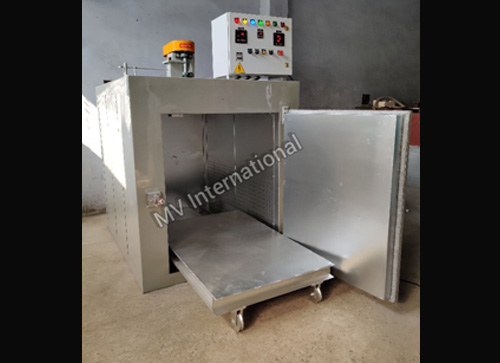
Varnish Baking Oven Manufacturers: A Buyer's Guide
Insulating varnish protects and bonds windings, but only a proper bake turns a wet coat into a hard, protective film. When buyers compare Varnish Baking Oven Manufacturers, the deciding factors are even cure, safe solvent extraction and control that repeats batch after batch.
Even Cure, Every Time
The varnish must cure uniformly across the assembly, so airflow and control decide quality. Ask how the oven circulates heat through a loaded chamber and how closely it holds the cure temperature over a full cycle.
Solvent Extraction Is Part of the Design
Baking releases solvent vapour that has to be carried away safely. A proper varnish baking oven builds extraction into the design. Ask how vapour is handled and whether the design suits your varnish and volumes.
- Even airflow for a uniform cure
- Designed solvent-vapour extraction
- Programmable ramp and soak control
- Capacity for coils, stators or batches
Fits Electrical Manufacturing
Varnish baking sits alongside winding and transformer work. Discuss a motor winding baking oven and, for larger assemblies, a transformer heating oven. A supplier who knows electrical manufacturing will match the oven to your assemblies.
Questions Worth Asking
Ask about uniformity, extraction design, control accuracy and serviceability. Ask how the oven has been built for varnish work specifically.
Final Thoughts
Choose on even cure, proper extraction and reliable control. Those decide whether the bake delivers the protective film your insulation needs. For winding work, compare a motor winding baking oven from the same maker.