

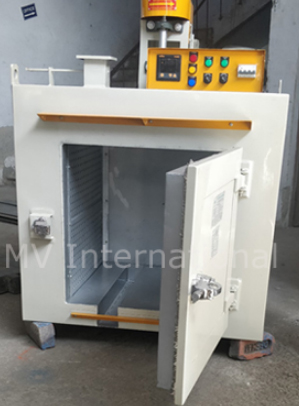
Drying Oven Manufacturers: What to Check Before You Buy
Moisture is one of those problems you do not see until it becomes a defect further down the line, a coating that lifts, a winding that fails, a casting with gas porosity. That is why the drying stage carries more weight than its quiet reputation suggests. When comparing Drying Oven Manufacturers, the real question is whether the oven can drive moisture out fully and evenly, batch after batch.
Even Heat Beats High Heat
A hotter oven is not a better dryer. What matters is uniform temperature and steady airflow so every part in the load dries at the same rate. Uneven drying leaves pockets of residual moisture that pass inspection and cause trouble later. Ask how uniformity is verified across a full chamber, not at a single point.
Moisture Has to Go Somewhere
Drying is not only about heat; it is about removing the moisture the heat releases. Adequate fresh-air exchange and exhaust are what stop humid air from simply recirculating. A well-designed drying oven balances heat, airflow and extraction so the chamber genuinely dries rather than just warms.
- Chamber capacity matched to real batch sizes
- Fresh-air and exhaust design sized for the moisture load
- Temperature stability over a long drying cycle
- Airflow that avoids cooler, slower-drying pockets
Different Materials, Different Cycles
A silica gel drying cycle looks nothing like drying heavy foundry cores. Gentle, controlled heat suits sensitive materials; high-capacity even heat suits dense loads. Matching the oven to the material is where a specialist manufacturer earns their keep.
Running Cost Is Part of the Spec
Insulation quality and door sealing decide how much energy the oven wastes and how quickly it recovers after loading. Over years of daily operation, a poorly insulated chamber quietly costs far more than the price difference at purchase. Treat efficiency as a specification, not an afterthought.
Final Thoughts
Judge a drying oven on uniformity, moisture extraction, capacity and efficiency, in that order. A manufacturer who understands your material and moisture load will build something that dries reliably rather than a generic hot box. For broader thermal needs, an industrial oven or heating oven can be specified on the same principles.